Sarajevo
Four days in Bosnia and Herzegovina’s capital. Football friends, a charming Old Town, a walking tour we really recommend and a day trip with a few surprises along the way.
Sarajevo might not be the first city that comes to mind when planning a European weekend getaway. But that’s exactly why we love exploring places like this!
We enjoy discovering new destinations, meeting people and experiencing a little more than just the usual tourist attractions.
And sometimes football gives us another excellent reason to pack our bags.
This time, our trip brought together sightseeing, Swedish football friends, an unforgettable farewell to Edin Džeko and a taxi adventure to Visoko and the Tunnel of Hope.
Day 1 – Welcome to Sarajevo
We arrived in Sarajevo on Wednesday and headed straight to our accommodation, Hotel Old Sarajevo, located right in the heart of the historic Old Town.
When we’re on a short city break, we prefer staying centrally. Spending valuable holiday time travelling back and forth to a hotel isn’t really our idea of fun.
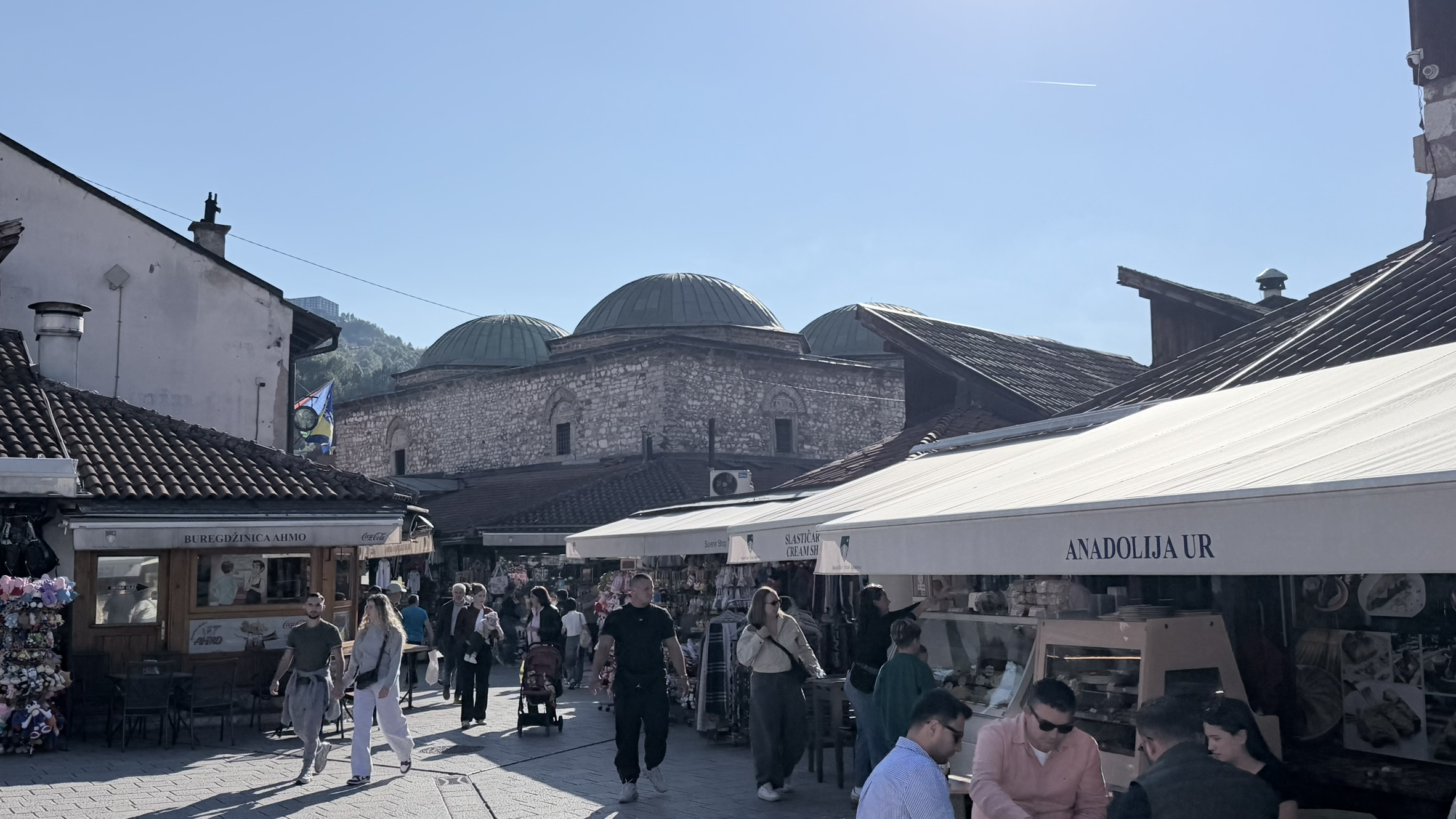
Sarajevo’s Old Town, Baščaršija, is the historic heart of the city, with narrow streets, traditional shops, restaurants and cafés.
It’s also where Sarajevo’s mix of Eastern and Western influences becomes especially noticeable.
Our Accommodation – Hotel Old Sarajevo
We chose Hotel Old Sarajevo for our stay. Its central location made it a convenient base for exploring the city on foot.
Goldpackers tip: If you’re visiting Sarajevo for just a few days, we recommend looking for accommodation in or around Baščaršija. You’ll have much of the historic centre within walking distance.
Football Friends – The Perfect Start to Our Trip ⚽
Our first evening was dedicated to meeting up with football friends.
Football has taken us to many interesting places over the years, and one of the best things about it is meeting people who share the same passion.
It doesn’t really matter where in the world you are. Football has a way of bringing people together.
So instead of rushing around trying to see every attraction on our first evening, we enjoyed spending time with friends.
A pretty good start to our Sarajevo adventure!
Day 2 – A Walking Tour Through Sarajevo’s History
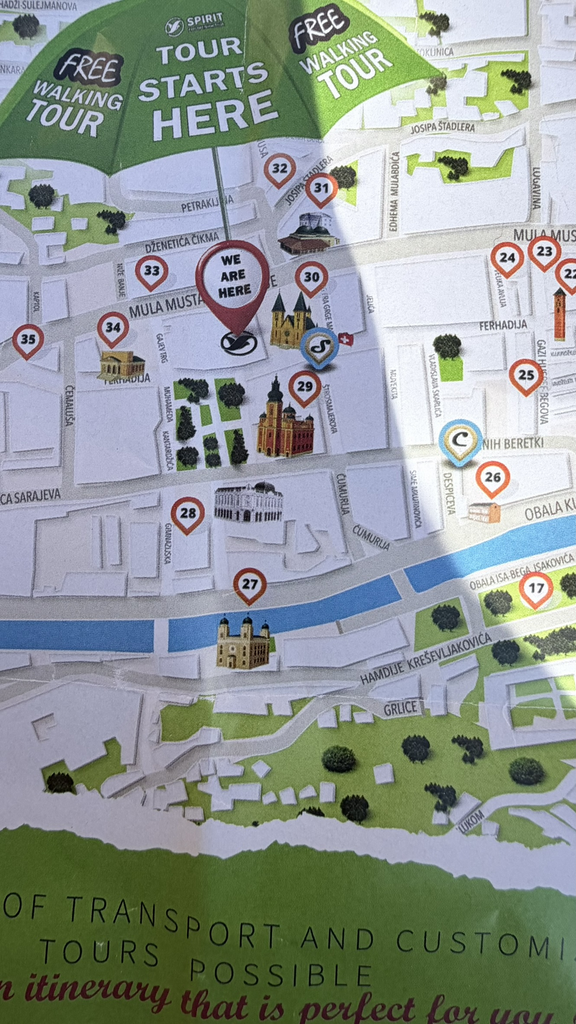
On our second day, it was time to get to know Sarajevo a little better. We joined a free walking tour, and it’s something we really recommend.
There is a lot to take in here. Ottoman influences sit alongside buildings from the Austro-Hungarian period, while reminders of the war in the 1990s are still part of the city around you.
Having the stories behind the places explained helps bring it all together. A beautiful building, a small house and even a mark in the pavement can tell you something very different about Sarajevo.
Vijećnica – Sarajevo’s City Hall
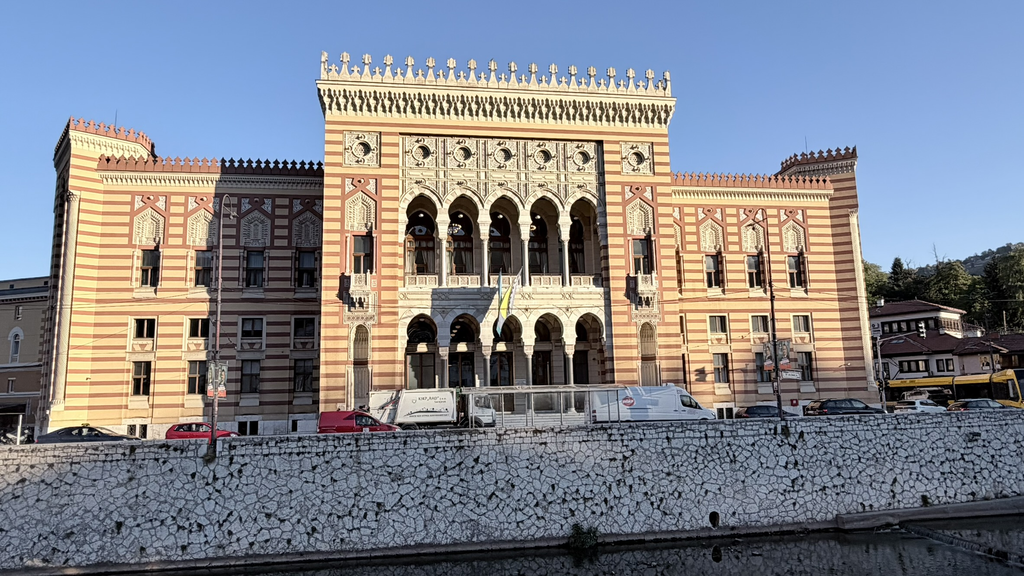
One of our stops was Vijećnica, Sarajevo’s City Hall. With its patterned façade and arches, it’s certainly a building that catches your attention.
It opened in 1896 during the Austro-Hungarian period and later became home to the National and University Library.
During the siege in 1992, the building was shelled and caught fire. Much of the library’s collection was destroyed. After extensive restoration, City Hall reopened in 2014.
Knowing that history gives you a different perspective on the building standing there today. There is much more behind that beautiful façade than you might first realise. You can read more on the official City Hall website.
Inat Kuća – The Little House That Moved Across the River
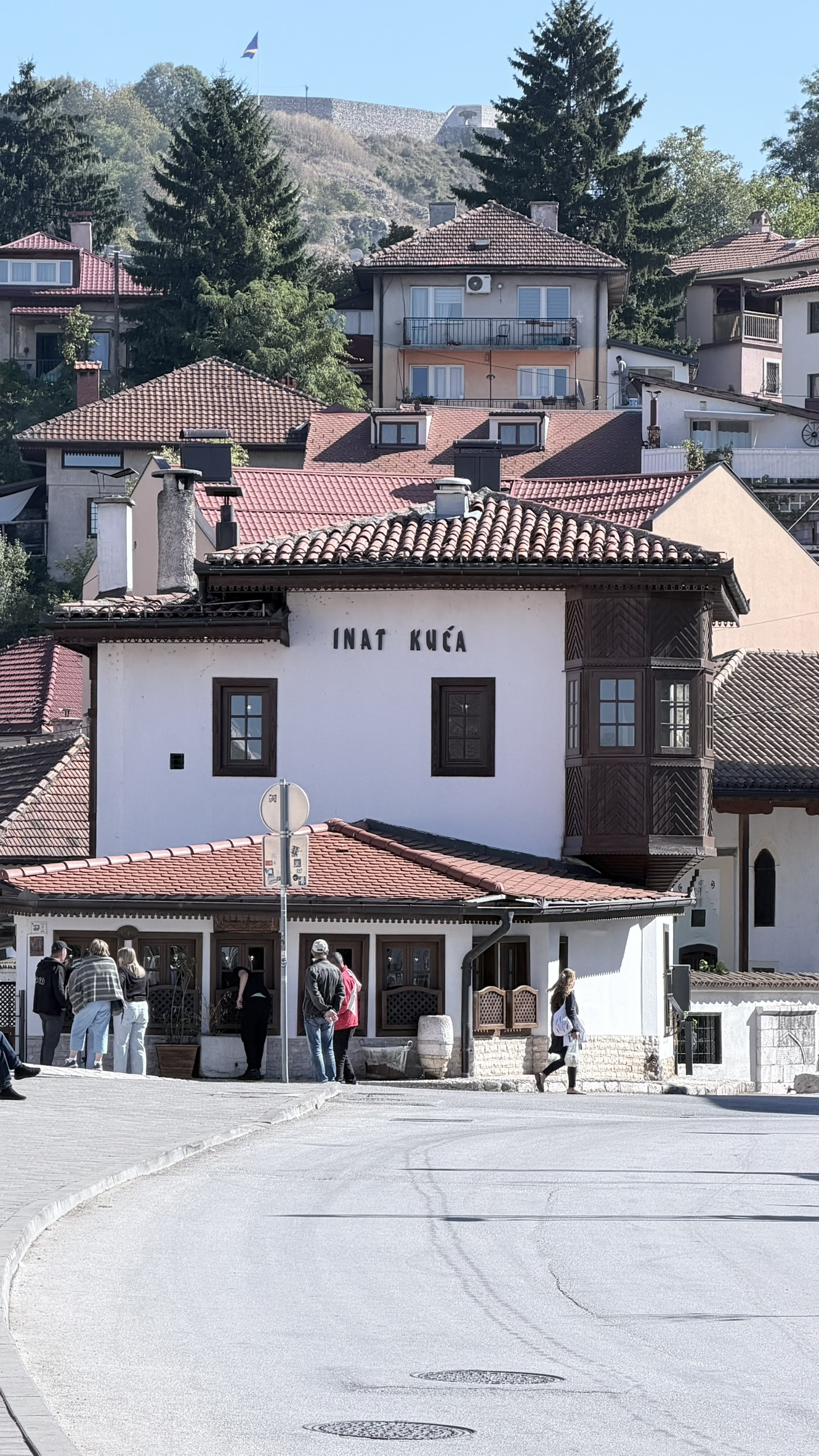
Close by is a much smaller building with a rather memorable story: Inat Kuća, often known as the House of Spite.
When space was needed for the City Hall development, the owner reportedly agreed to give up his house only if it was moved to the other side of the river. So the house was dismantled and rebuilt on the opposite bank.
Now that’s one way to make sure you get to keep your home!
Today, Inat Kuća is a restaurant serving traditional Bosnian food. We loved the story of this little house holding its own against such a grand building project.
The Bridges Across the Miljacka
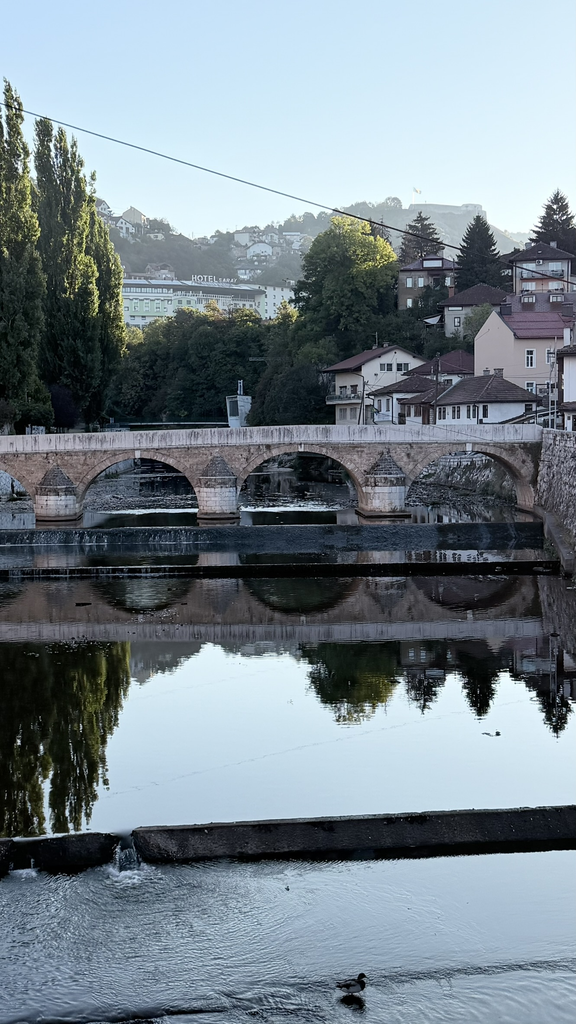
The Miljacka River runs through Sarajevo, and its bridges connect the neighbourhoods on either side. Near City Hall you’ll find Šeher-Ćehajina Bridge, with the famous Latin Bridge a little farther along the river.
Crossing between the banks gives you different views of the buildings and a better sense of how the city fits together.
Across the river from the Old Town is Bistrik, where you’ll find the lower station for the cable car up to Trebević. That was where we headed after the tour, but first there was more history to discover.
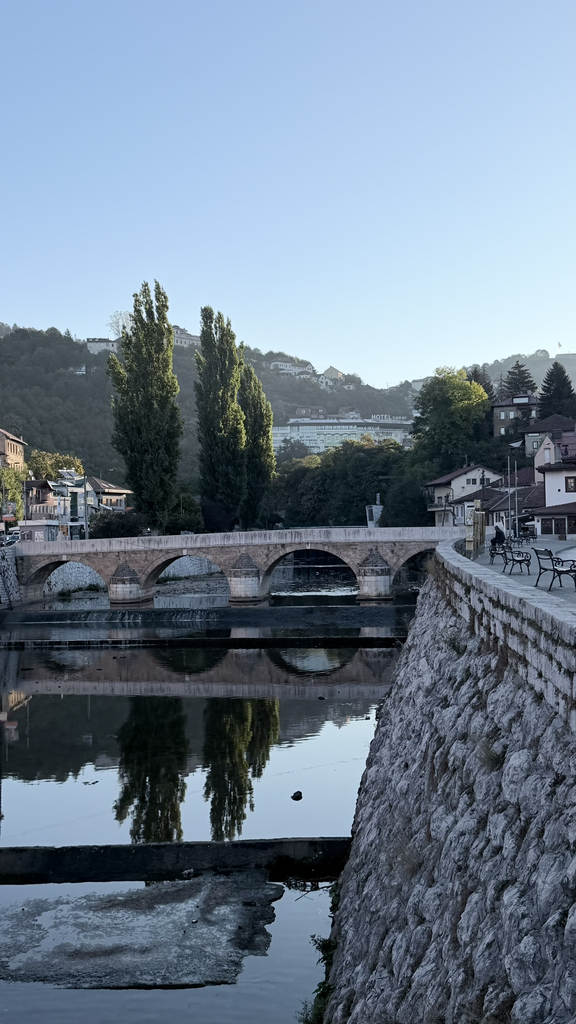
The Street Corner Where History Changed
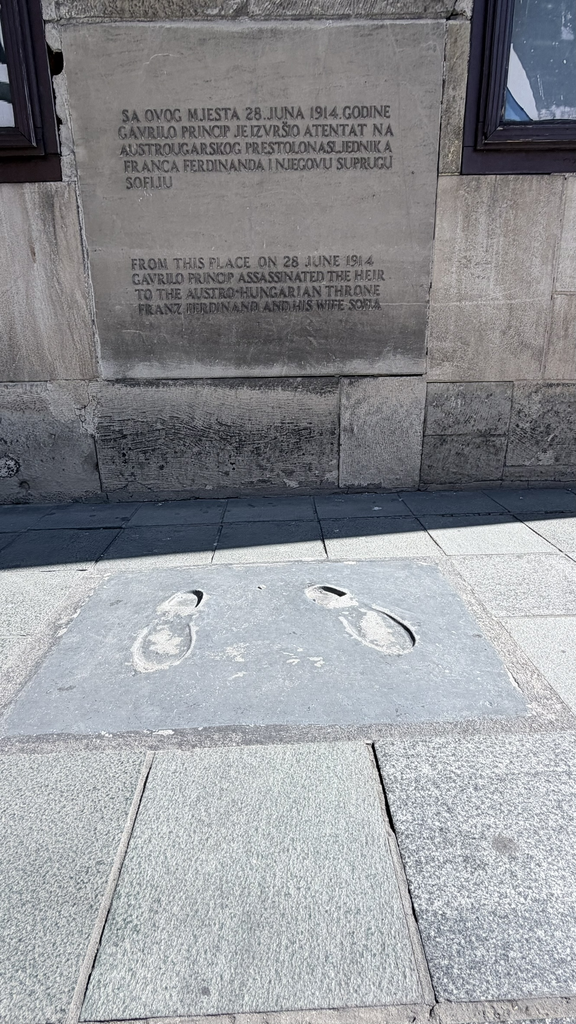
By the northern end of the Latin Bridge is the spot associated with the assassination of Archduke Franz Ferdinand and his wife, Sophie, on 28 June 1914.
Gavrilo Princip fired the shots here that triggered the crisis leading to the First World War.
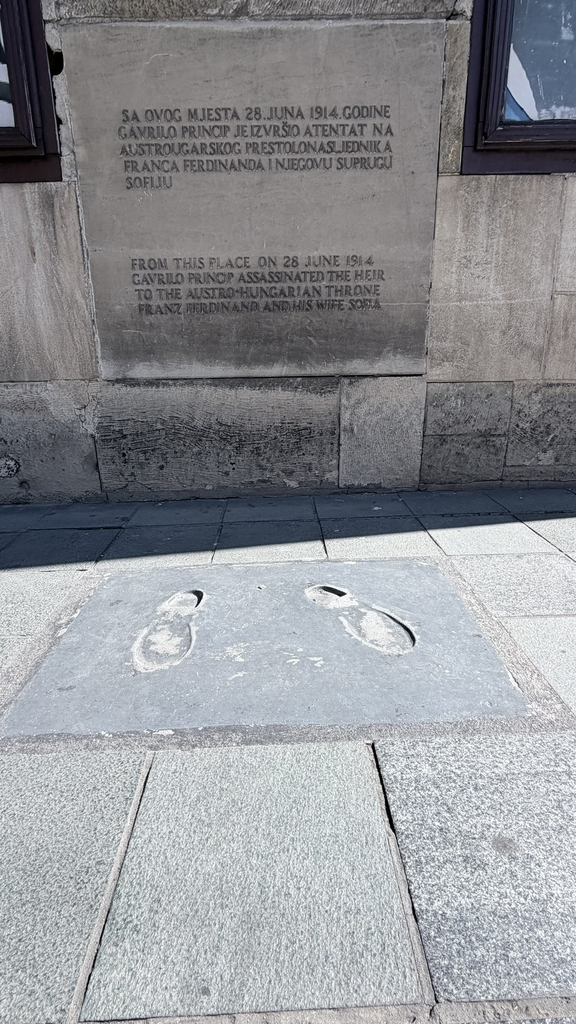
It’s strange to stand beside what looks like an ordinary street corner and think about how closely it is connected to something you learned about in school. Suddenly, that history has an actual place attached to it. For more background, see the history of the Latin Bridge.
Sarajevo Roses – Memories in the Pavement
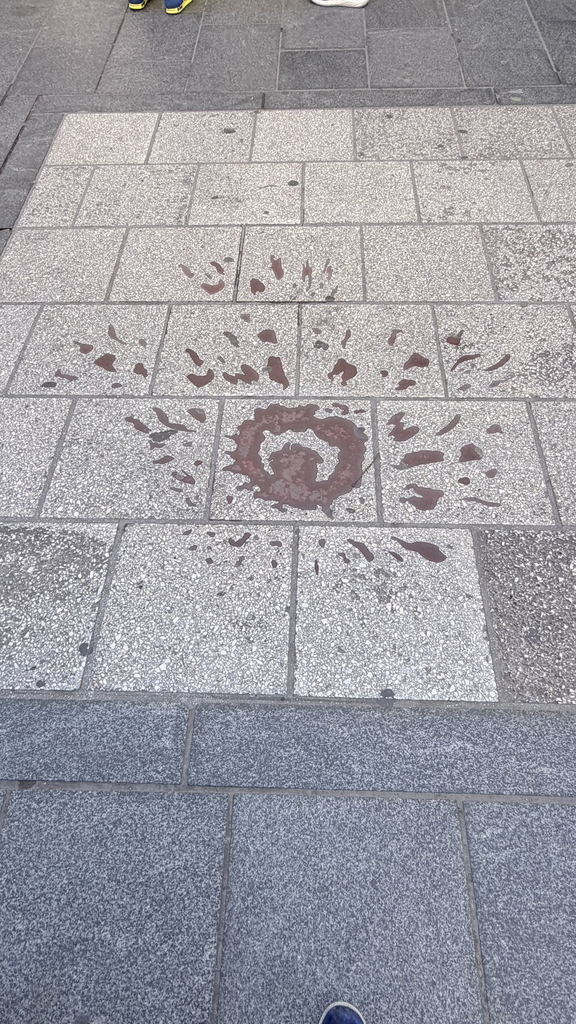
Some of the most meaningful reminders of Sarajevo’s past are beneath your feet.
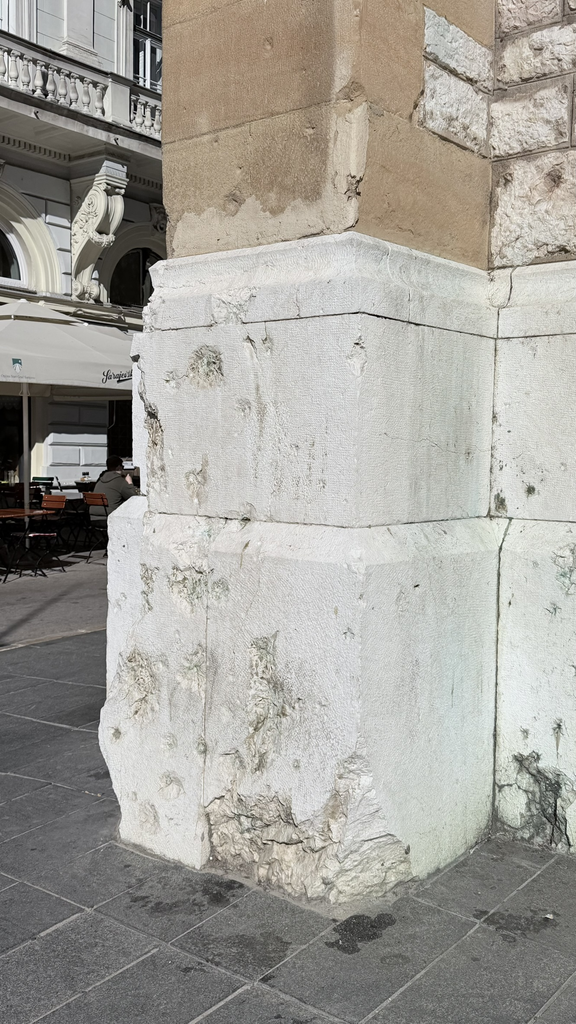
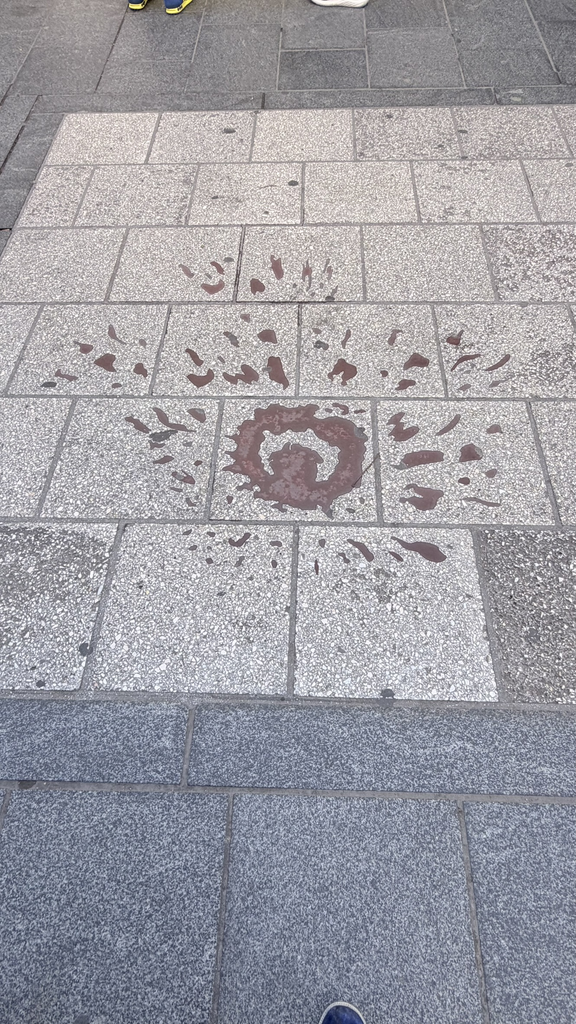
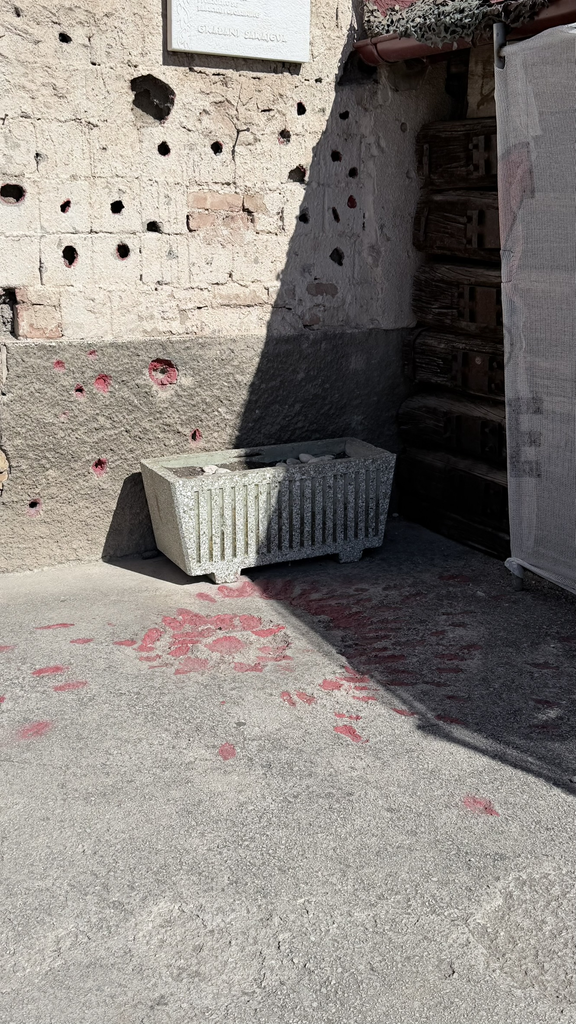
The Sarajevo Roses are scars left by mortar explosions, filled with red resin to remember people killed during the siege. The patterns resemble flowers, which is how they got their name.
They sit within the streets people use every day. Small memorials, but a powerful reminder of what happened here.
The Sarajevo Roses project shares more about these memorials and their history.
Photo placeholder: A Sarajevo Rose, with a respectful caption identifying it as a memorial. Remove this note after adding your photo.
Taking the Cable Car Up to Trebević
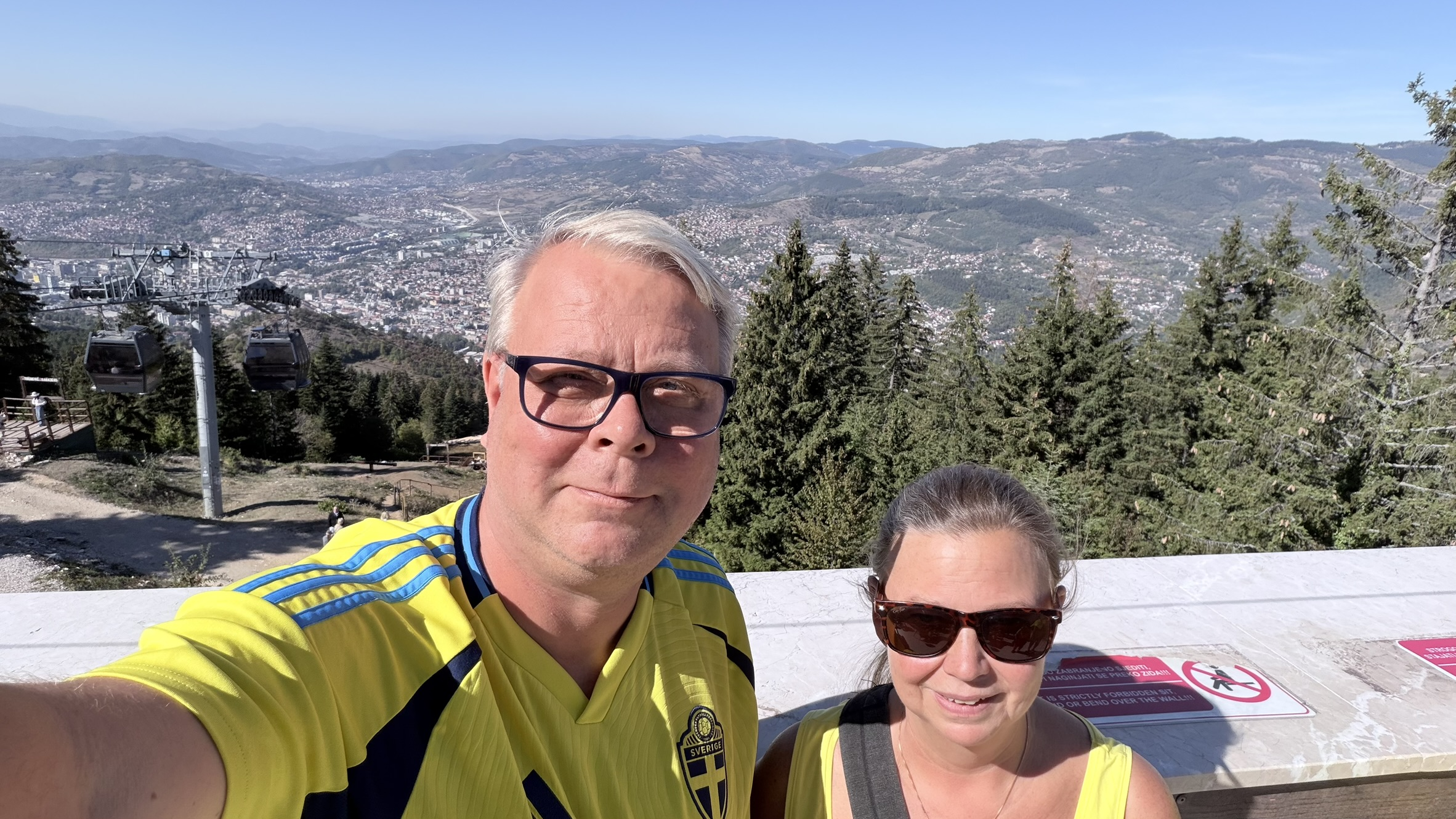
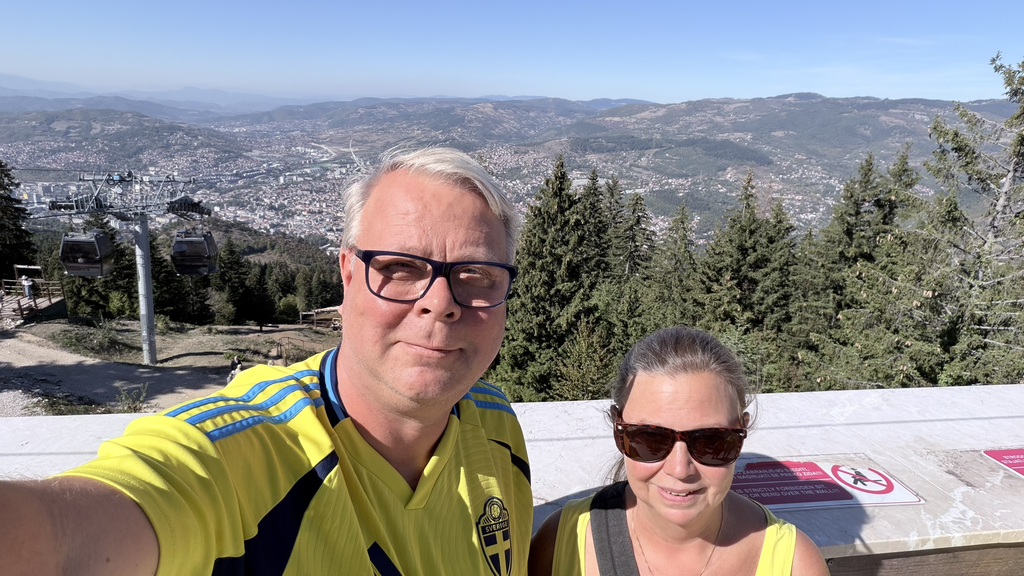
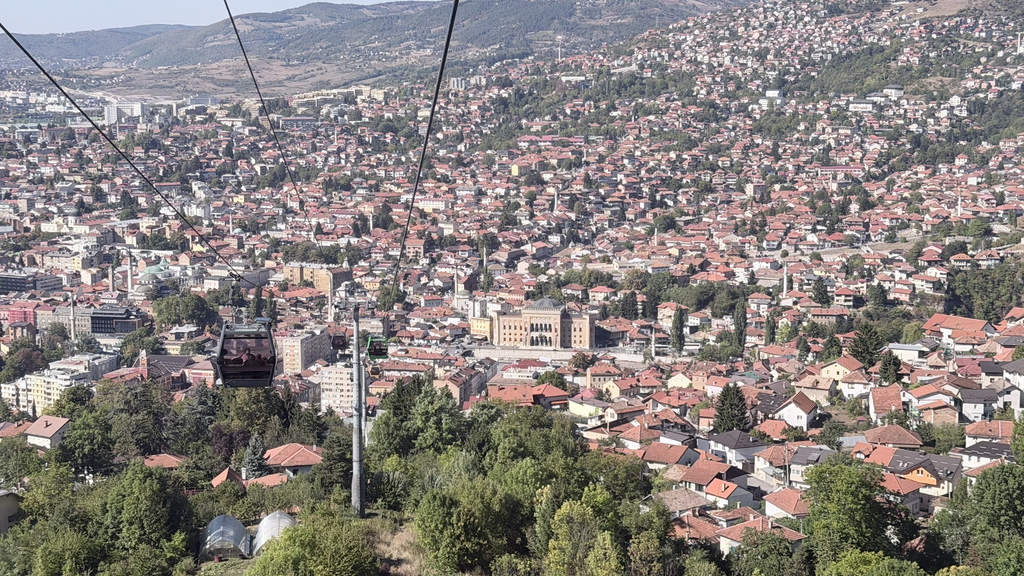
After the walking tour, we took the cable car up to Trebević and enjoyed the view.
Having spent the day exploring at street level, it was lovely to see Sarajevo from above, with the city spread out in the valley and the mountains around it.
It also gave us a chance to slow down after a day with plenty to think about. Sometimes you don’t need to add another activity. Just taking in the view is enough.
Goldpackers tip: We enjoyed combining the walking tour with the cable car afterwards. Check the official cable car website when planning your visit.
Day 3 – Match Day and an Unforgettable Farewell ⚽
Day three was all about football!
Our focus was on gathering the Swedish fans and watching Bosnia and Herzegovina take on Sweden. Sightseeing could wait. This was time for football friends and supporting our team.
But the occasion also belonged to Bosnia’s star player, Edin Džeko, who was being given his farewell.
And what a farewell it was!
We were there to support Sweden, but you couldn’t help appreciating what Džeko meant to the Bosnian supporters. This was one of those moments when the feeling around a match becomes just as memorable as the football itself.
Honestly, Swedish supporters could learn a thing or two from that send-off! It became one of the standout memories of our trip.
The Bosnian football association’s tribute to Džeko gives some background to his farewell against Sweden.
The result? Well the game ended 1-1 so a good night for all supporters
Droneshow
Day 4 – Visoko, the Ravne Tunnels and the Tunnel of Hope
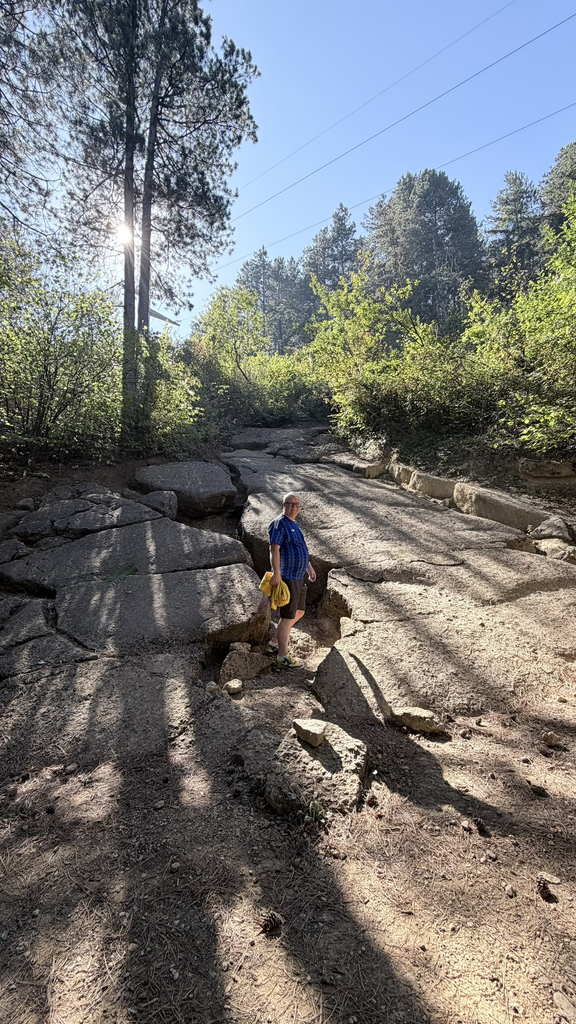
For our fourth day, we arranged a taxi trip to Visoko to visit the so-called Bosnian pyramids and the Ravne tunnels.
On the way back to Sarajevo, we also stopped at the Tunnel of Hope. Three very different visits, all fitted into a day that we could organise at our own pace.
The Bosnian Pyramid of the Sun
Pyramids in Bosnia? That certainly catches your attention when you’re looking at places to visit around Sarajevo.
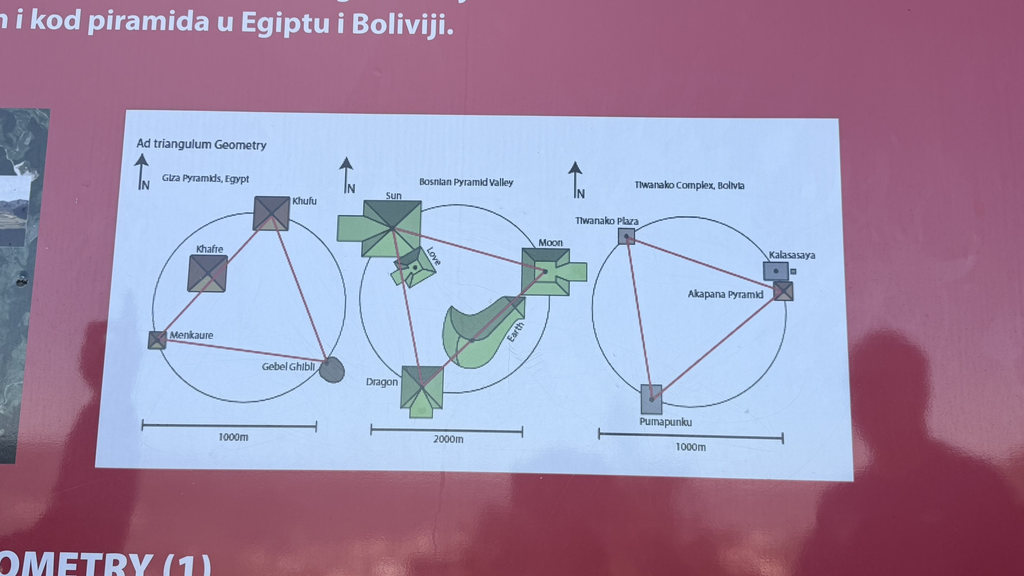
The hill known as Visočica is promoted as the Bosnian Pyramid of the Sun. Semir Osmanagić brought the idea to public attention in 2005, claiming that the hills around Visoko were ancient pyramids built by people.
There is an important distinction here: these claims are not supported by mainstream archaeology. The hills are regarded as natural geological formations, rather than proven ancient pyramids.
The area does have an established history, including the remains of the medieval town of Visoki on Visočica. An open letter from archaeologists explains the concerns about the pyramid claims and the area’s historical heritage.
For us, this was a chance to see the much-talked-about place for ourselves. It certainly added something different to a trip that had already included city walks, mountain views and football.
Exploring the Ravne Tunnels
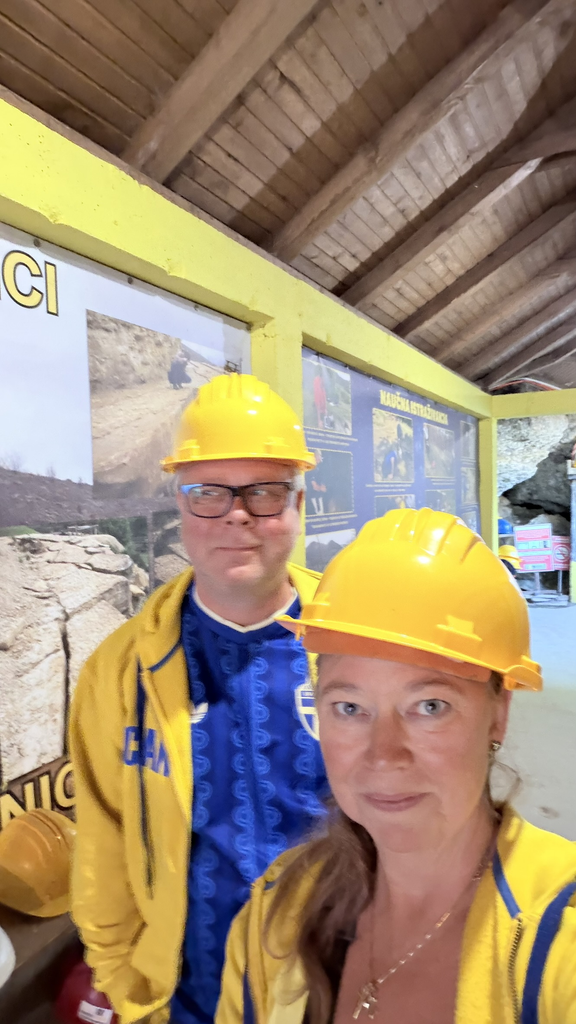
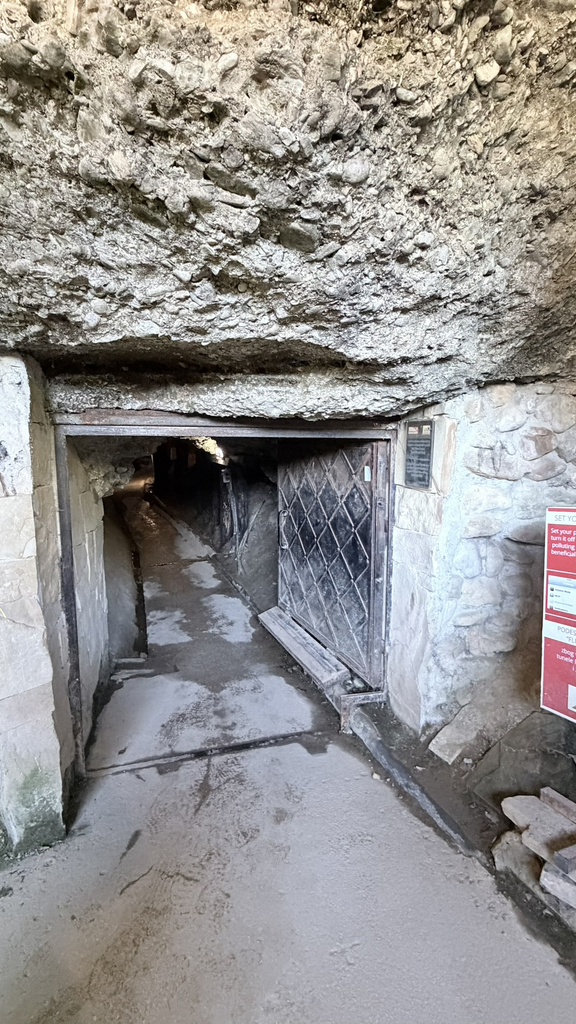
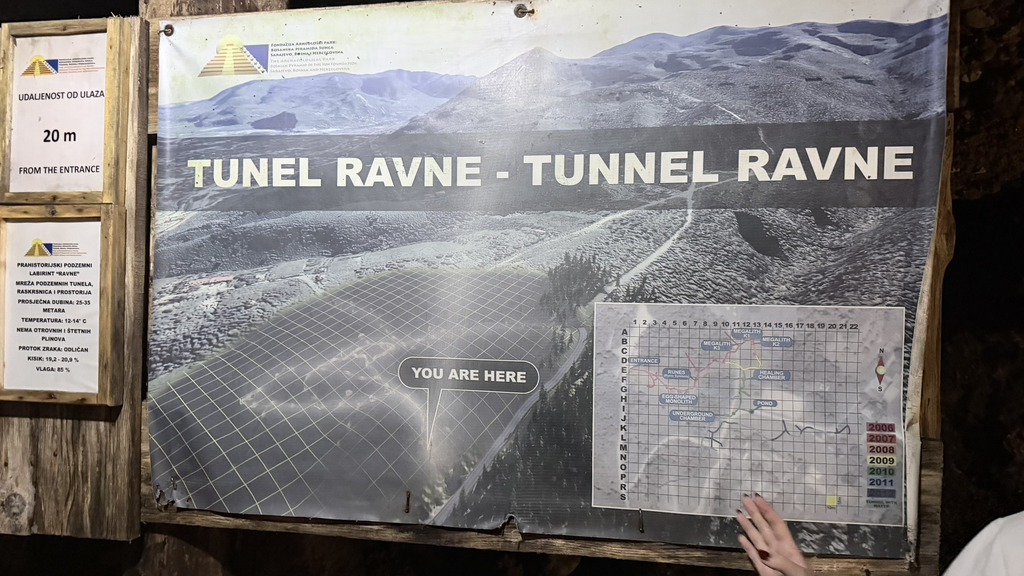
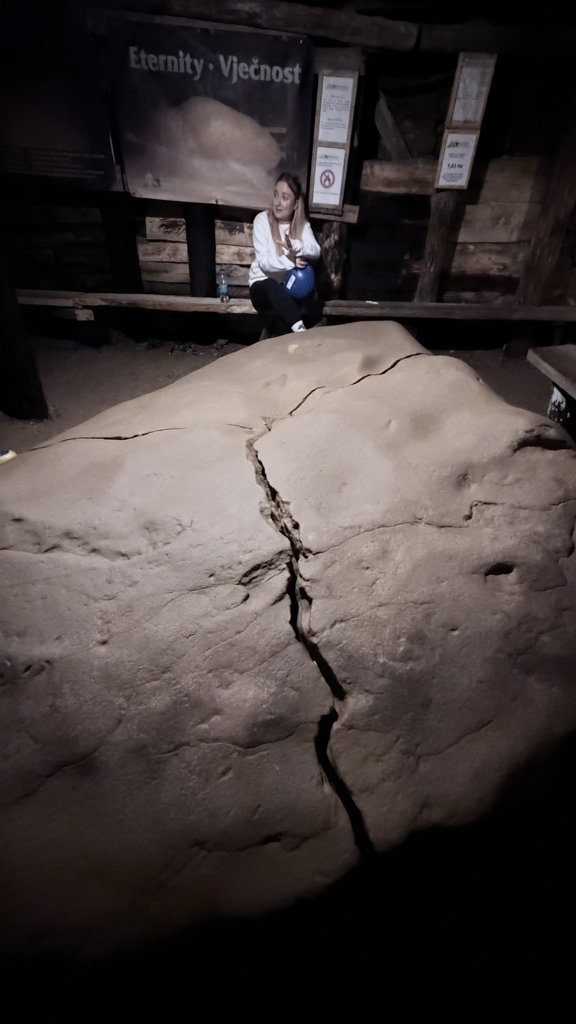
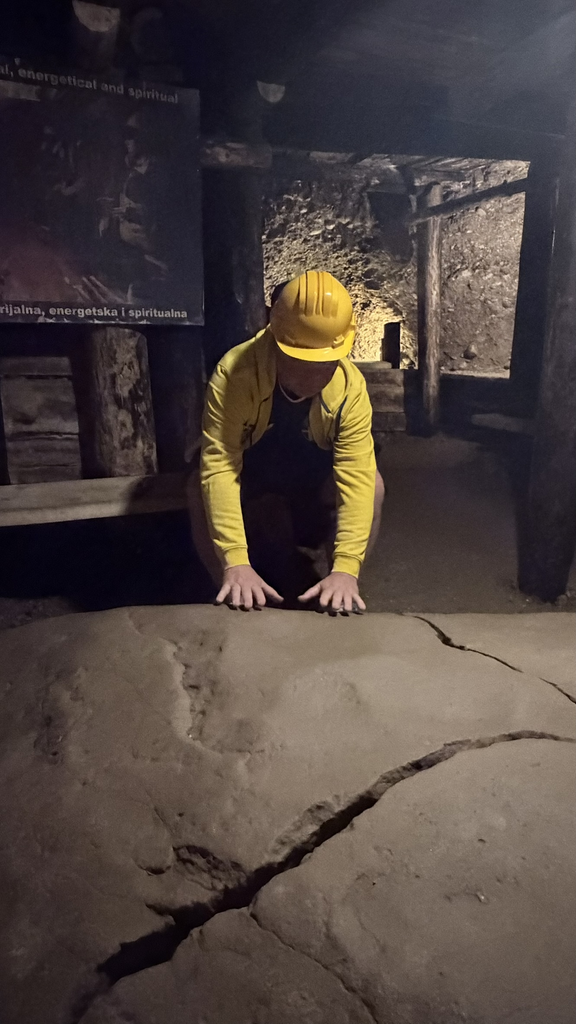
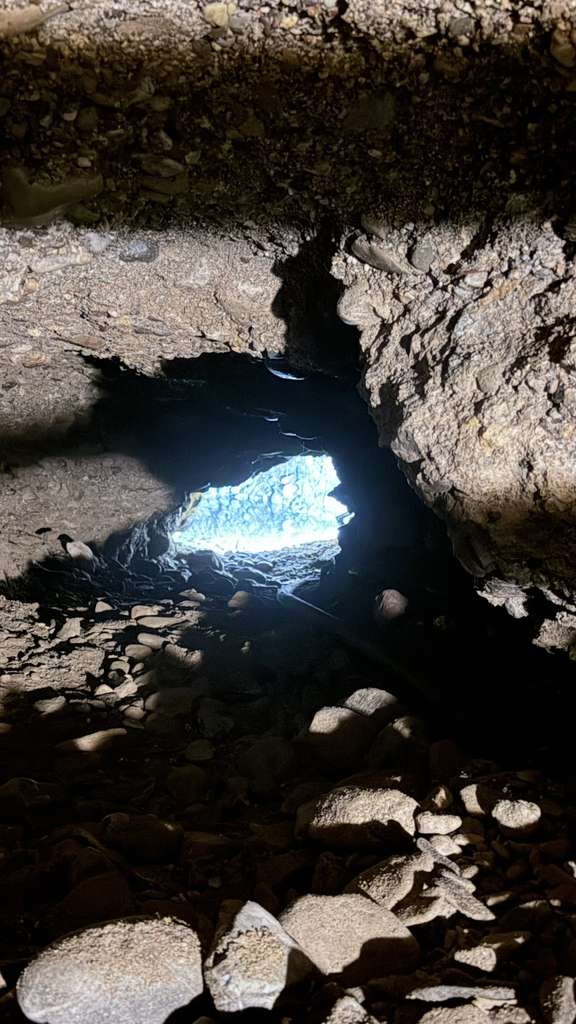
Our visit also included the Ravne tunnels near Visoko, which form part of the same visitor attraction as the pyramid project.
Here, the focus moves from the hills above ground to the passages beneath it. It makes for quite a change of setting during the day.
You’ll come across claims about the tunnels’ great age and their connection to the supposed pyramids. These are the project’s interpretations rather than established historical facts.
You can find visitor information in Visit Visoko’s introduction to the Ravne tunnels, keeping in mind that it also presents the project’s own account of the site.
The Tunnel of Hope – Sarajevo’s Wartime Lifeline
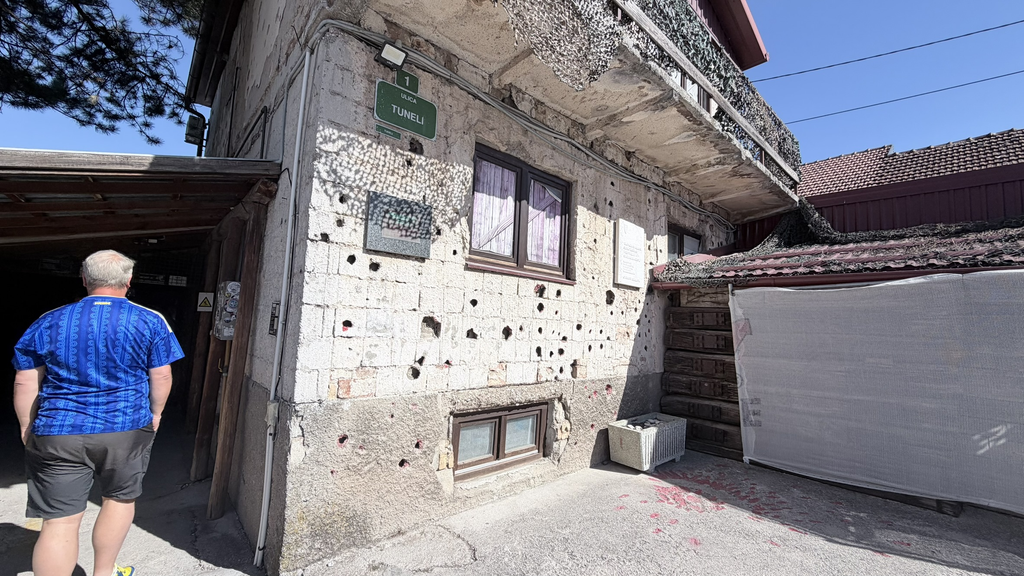
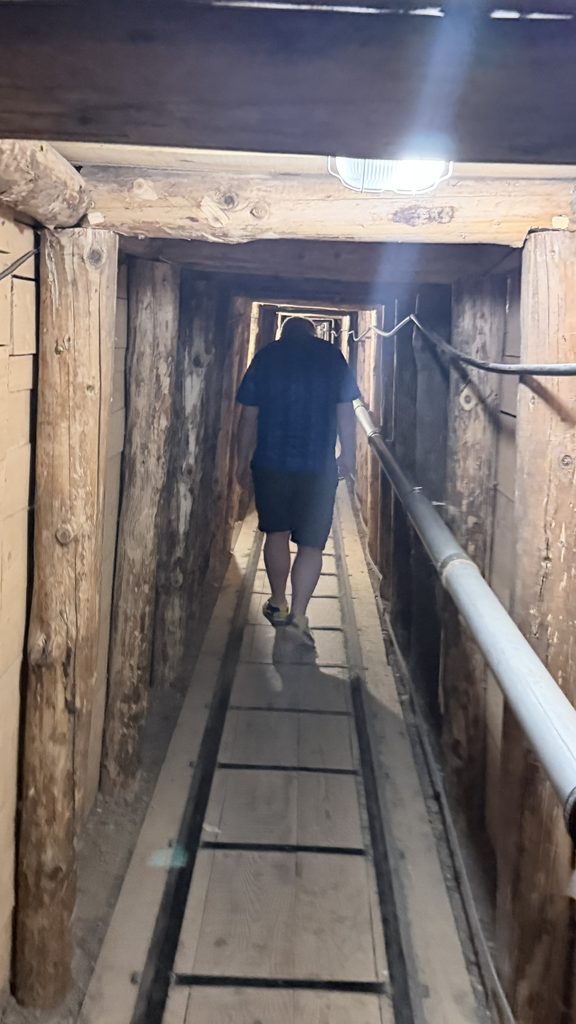
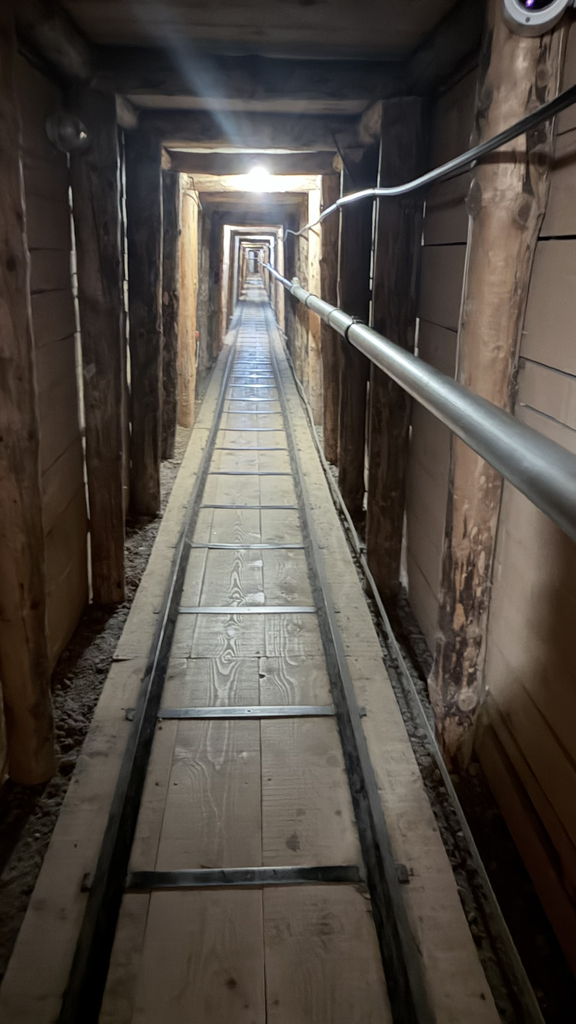
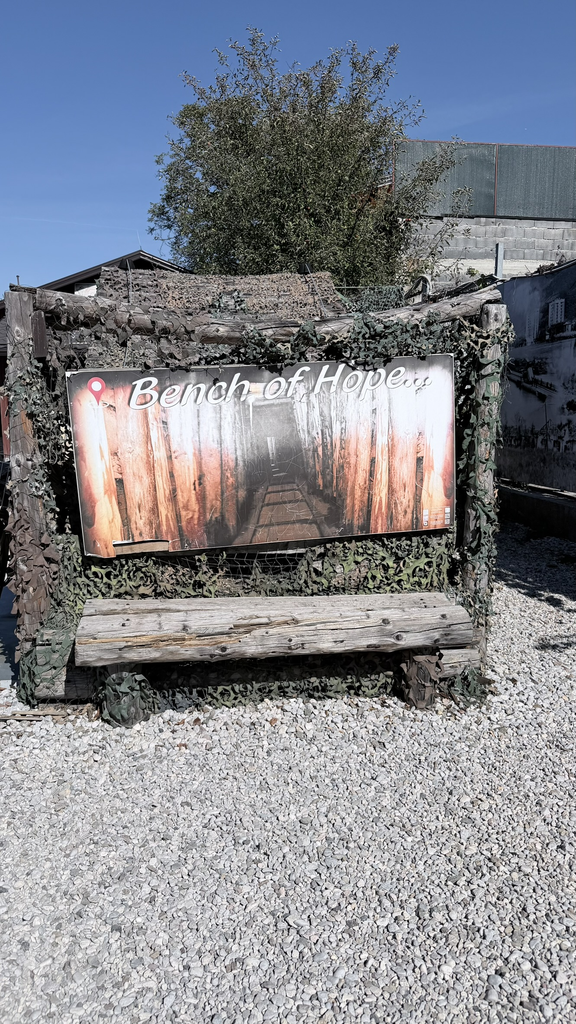
On our way back, our taxi stopped at the Tunnel of Hope, also known as Tunel spasa.
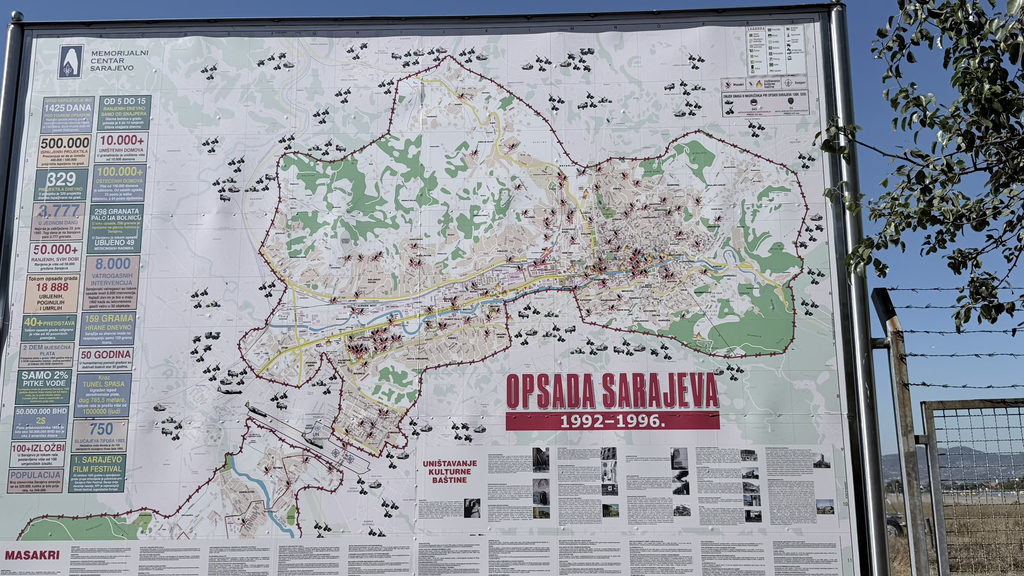
This visit brought us back to Sarajevo’s more recent history and the struggle to keep the city connected to the outside world during the siege.
Built in 1993 beneath the airport runway, the tunnel linked Dobrinja and Butmir. It allowed supplies and people to move in and out of the besieged city, providing a vital connection when ordinary routes were cut off.
Today, the museum and memorial site use sections of the tunnel, photographs and objects to tell the story of its construction and the siege.
After seeing the Sarajevo Roses on our walking tour, this added another part to our understanding of what the city had been through. You can read more at Memorial Centre Sarajevo.
Our Taxi Driver and His Telephone Translator
One detail from the day still makes us smile: our taxi driver didn’t speak English.
Whenever he needed to tell us something, he called a woman who translated for him over the phone. A friend? His daughter? We never quite worked that out!
Either way, she helped explain what he wanted to say, and that became our way of communicating during the trip.
It’s often these little moments that stay with you just as much as the places you set out to visit.
Was the Private Taxi Worth It?
The whole taxi trip cost us around €170, including the driver waiting while we visited each stop.
For a private trip, we thought that was quite reasonable. Group tours can be a cheaper option, but our time mattered to us, and we liked being able to decide how long to spend in each place.
We could visit the Pyramid of the Sun, the Ravne tunnels and the Tunnel of Hope without having to fit in with a group’s timetable.
For us, that flexibility was worth paying for.
Goldpackers tip: If you’re considering a similar trip, agree on the route, waiting time and total price with your driver beforehand. The €170 was what we paid for our particular outing.
Four Days, Plenty of Memories
Sarajevo gave us a lovely mix of the things we enjoy about travelling: exploring somewhere new, spending time with friends and finding stories we hadn’t expected.
There was the little house that moved across the river, the view from Trebević and a football farewell we won’t forget. There were also places that asked us to slow down and think about the city’s past.
And, of course, a taxi driver with a translator just a phone call away.
A pretty memorable four days!